

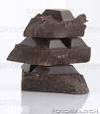
 With Valentine’s Day coming up soon, an abundance of chocolate will be purchased and eaten. You may be one of those who openly admit your choco-holism, but if not you then certainly someone you love will be consuming chocolate this year. Do a favor for the health of those you care about and pass this article along from the Roanoke Athletic Club, on the benefits of dark chocolate.
While we all know that sugar is never a healthy ingredient, at least in darker chocolates there is generally less sugar as well as some positive factors for improving health. Make Valentine’s Day even healthier by shopping at the nearest health food store and purchasing organic and/or naturally sweetened chocolate for your sweetheart.
Scientists at Harvard University School of Public Health recently examined 136 studies on cocoa, the foundation for chocolate. They discovered it does seem to boost heart health. “Studies have shown heart benefits from increased blood flow, less platelet stickiness and clotting, and improved cholesterol,” says Mary B. Engler, Ph.D., director of the Cardiovascular and Genomics Graduate Program at the University of California. These benefits are the result of cocoa’s antioxidant chemicals known as flavonoids, which seem to prevent both cell damage and inflammation.
|
Dark chocolate has more antioxidants and less sugar than other varieties. But the flavor gets less creamy and increasingly bitter the darker you go. Experts say any treat with 60 plus percent cocoa packs a healthy punch. Be cautious as to the type of dark chocolate you choose: chewy caramel-marshmallow-nut-covered dark chocolate is by no means a heart-healthy food option. What wreaks havoc on most chocolate products are the fat and calories that accompany other ingredients. While chocolate may not be the most healthy snack around, it does contain several nutrients. High in potassium and magnesium, chocolate also provides us with several vitamins – including B1, B2, D, and E. As for calories, no one is going to claim chocolate is a diet food. The average chocolate bar contains approximately 250 calories which are low enough to enjoy as an occasional treat. |
|
|
|
|
 |
Bud Grey, Vice President 540-989-5758 4508 Starkey Rd., SW Roanoke, VA 24014 RACBACinfo@carilion.com www.carilionfitness.com |